

3073 Trenwest Drive, 1st Floor
Winston-Salem, NC 27103

Astigmatism

What is astigmatism?
Astigmatism is a very common vision condition that causes blurry or distorted vision at near and far distances. It happens when the front surface of the eye (cornea) or the lens inside the eye has an irregular shape.
Instead of being perfectly round like a basketball, the eye surface is shaped more like a football. This causes light to focus unevenly inside the eye, leading to blurry vision.
At Summit Eye Care, we diagnose astigmatism through a comprehensive eye exam and provide customized treatment options to restore clear vision.
Common Symptoms of Astigmatism
Many people live with astigmatism without realizing it because symptoms can develop slowly.
You may have astigmatism if you notice:
Blurry or distorted vision at all distances
Difficulty seeing clearly at night
Headaches after reading or screen use
Eye strain or tired eyes
Squinting to see clearly
Glare or halos around lights
Vision that feels inconsistent or fluctuates
If these symptoms sound familiar, a comprehensive eye exam can determine whether astigmatism is the cause.
Why does astigmatism cause blurry vision?
Astigmatism occurs when the eye does not focus light evenly on the retina.
Instead of one clear focal point, light is split into multiple focus points. This leads to:
blurred vision
distortion
eye strain
difficulty seeing fine details

What causes astigmatism?
Astigmatism is usually caused by an irregular shape of the cornea or lens. Common causes include:
genetics (most common)
natural eye shape variation
eye injury or trauma
previous eye surgery (less common)
changes in the cornea over time
Astigmatism is NOT caused by reading, screen use, or poor lighting.
Why do my symptoms feel worse at night?
Many patients notice astigmatism most at night because low light makes focusing more difficult. Common night symptoms include:
streaked or blurry headlights
halos around streetlights
reduced contrast
difficulty driving safely
This happens because irregular focus becomes more noticeable in dim lighting conditions.
Why do I get headaches or eye strain?
Astigmatism forces your eyes to constantly work harder to focus. This extra effort can lead to:headaches
eye fatigue
burning or tired eyes
difficulty concentrating during reading or screen use
How do I know if I have astigmatism?
The only way to know for sure is through a comprehensive eye exam.
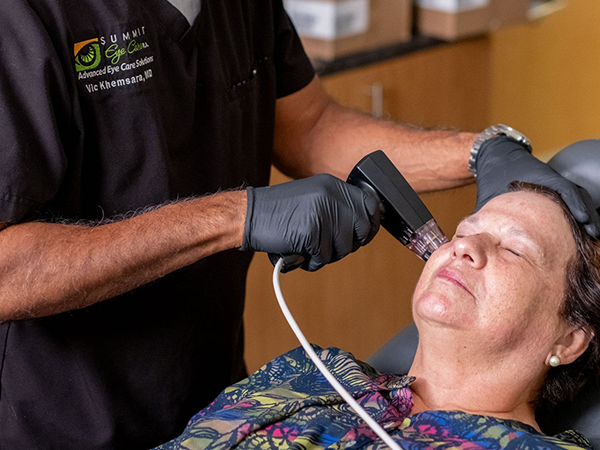
At Summit Eye Care, we use advanced testing to measure how your eye focuses light and determine whether astigmatism is present.
Can astigmatism get worse over time?
Yes. Astigmatism can slowly change over time due to:
natural aging
changes in the cornea
development of cataracts
other eye health conditions
This is why routine eye exams are important even if your vision feels stable.
Can astigmatism be corrected?
Yes. Astigmatism is highly treatable.
Glasses
Glasses use a special cylindrical prescription to correct how light enters the eye and improve clarity.
Contact lenses
Toric contact lenses are designed specifically for astigmatism and provide clear, stable vision.
Refractive surgery
Some patients may be candidates for vision correction procedures, depending on eye health and prescription stability.
Frequently Asked Questions About Cataract Surgery
Can astigmatism go away on its own?
No. Astigmatism usually does not go away naturally. However, it can be fully corrected with glasses or contact lenses, and in some cases, reduced with refractive surgery
Why do I have astigmatism in only one eye?
It is common for astigmatism to affect one eye more than the other due to natural differences in corneal shape between eyes
Can I wear regular contact lenses if I have astigmatism?
Standard contact lenses usually do not correct astigmatism well. Toric contact lenses are specifically designed for this condition.
Can children have astigmatism?
Yes. Astigmatism is common in children and should be corrected early to support healthy vision development and learning.
Schedule a Comprehensive Eye Exam
Contact Summit Eye Care in Winston-Salem, NC to schedule a comprehensive eye exam. Our team can evaluate your vision, determine if astigmatism is present, and help you take the next step toward clearer, more comfortable vision!


Summit Eye Care

Summit Eye Care P.A Surgery Center
Call Us Today:
336.765.0960
336.765.0960
Monday to Friday
8AM - 5PM
8AM - 5PM
© 2026 Summit Eye Care. All Rights Reserved. Accessibility Statement - Privacy Policy - Sitemap
