

3073 Trenwest Drive, 1st Floor
Winston-Salem, NC 27103

Age‑Related Macular Degeneration (AMD) in Winston‑Salem, NC
What Is Age‑Related Macular Degeneration?
Age‑Related Macular Degeneration (AMD) is a progressive eye condition that affects the macula, the central part of the retina responsible for sharp, detailed vision used for tasks like reading, recognizing faces, and driving. AMD is the leading cause of severe vision loss in adults over age 50.
With AMD, cells in the macula deteriorate over time, reducing central vision clarity while generally preserving side (peripheral) vision. Early stages often cause no symptoms, but as the disease progresses, vision may become distorted, blurry, or lose detail.

Types of Macular Degeneration
There are two main forms of AMD:Dry AMD - The most common form, characterized by the thinning of macular tissue and buildup of small deposits called drusen. Vision loss is gradual and central vision may become dull or blurred.
Wet AMD - Less common but more severe, occurring when abnormal blood vessels grow under the retina and leak fluid or blood, leading to faster and more significant vision loss.
Symptoms of AMD
In early stages, AMD may not cause noticeable symptoms. As it progresses, common signs include:
Blurry or fuzzy central vision
Straight lines appearing wavy or distorted
Difficulty reading or recognizing faces
Colors looking faded or less vibrant
Routine eye exams are essential to detect changes before vision loss becomes significant.
Who Is at Risk?
Age is the strongest risk factor. AMD is most common in people age 50 and older. Additional factors include:
Family history of AMD
Smoking or long‑term tobacco use
High blood pressure or cardiovascular disease
High cholesterol levels
Obesity
Chronic sunlight (UV) exposure
Certain genetic predispositions
How AMD Is Diagnosed
A macular degeneration evaluation typically includes:
Visual Acuity Testing - Measures how clearly you see at various distances
Dilated Eye Exam - Eye drops widen the pupils so the retina and macula can be examined
Amsler Grid Test - Detects central vision distortion
Retinal Imaging (OCT) - Identifies drusen or fluid in retinal layers
Accurate diagnosis helps determine the type and extent of macular degeneration and guides monitoring and treatment decisions.
AMD Treatment Options
AMD presents in two forms: dry and wet.
The less common wet form may respond to laser treatment and medication injections if diagnosed and treated early.
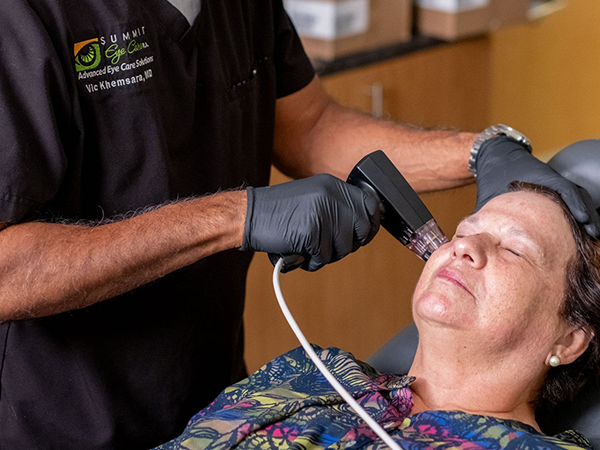
The more common dry form now has a new treatment option. Summit Eye Care is excited to offer the Valeda Light Delivery System, a gentle, non-invasive light therapy designed to help support retinal health and improve visual function.
Click Here to Learn More About Valeda Light Delivery System

Why Early Detection Matters
Vision lost to AMD cannot be restored, but early detection allows your eye doctor to monitor progression and recommend timely interventions to help preserve remaining vision.
Frequently Asked Questions
Is macular degeneration the same as normal aging?
No. AMD is a progressive retinal disease that specifically affects the macula and can significantly impair central vision.
Can AMD lead to blindness?
AMD primarily affects central vision and rarely causes total blindness, but severe central vision loss can impact daily activities like reading or driving.
Who should get screened for AMD?
Adults age 50 and older, especially those with risk factors like family history or smoking, should have regular eye exams. Early detection helps prevent major vision loss.
What are the early warning signs of macular degeneration?
Early AMD may cause blurry central vision, difficulty reading, distorted lines, or trouble seeing fine details, although some patients notice no symptoms initially.
Can smoking increase the risk of macular degeneration?
Yes. Smoking is one of the strongest risk factors for AMD and may significantly increase the risk of vision loss.
Does family history increase AMD risk?
Yes. Genetics and family history can increase the likelihood of developing age-related macular degeneration.
Schedule a Macular Degeneration Evaluation
If you are experiencing changes in your central vision or have risk factors for AMD, contact Summit Eye Care in Winston‑Salem, NC to schedule a macular degeneration evaluation. Early assessment is key to monitoring vision health and guiding care.
Call Us: (336) 765-0960


Summit Eye Care

Summit Eye Care P.A Surgery Center
Call Us Today:
336.765.0960
336.765.0960
Monday to Friday
8AM - 5PM
8AM - 5PM
© 2026 Summit Eye Care. All Rights Reserved. Accessibility Statement - Privacy Policy - Sitemap
