3073 Trenwest Drive, 1st Floor
Winston-Salem, NC 27103

What to Expect During a Dry Eye Evaluation

Dry eye is not always caused by one issue. It can involve tear quality, tear quantity, inflammation, oil gland dysfunction, or allergies. A dry eye evaluation at Summit Eye Care is designed to look closely at the full tear film and identify what is driving your symptoms before treatment begins. Our goal is to move beyond temporary relief and create a plan based on what your eyes actually need.
Why the Right Diagnosis Comes First
Many people with burning, watering, blurred vision, redness, or irritation assume all dry eye is the same. In reality, different types of dry eye require different solutions. A comprehensive evaluation helps us determine whether your symptoms are tied to inflammation, poor oil gland function, allergies, or reduced tear production so we can recommend the right treatment from the start.
What Testing May Be Included
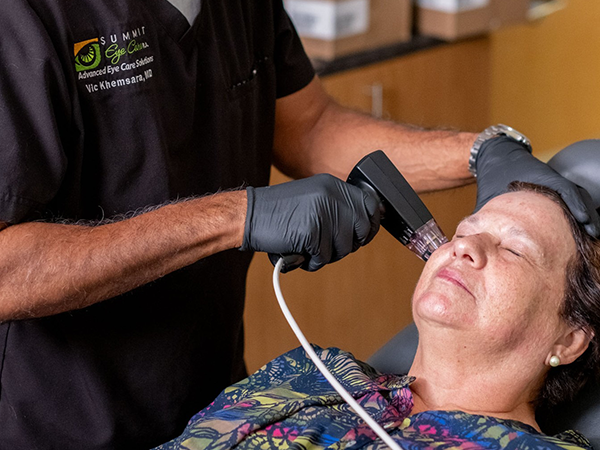
During your dry eye evaluation, we may use several advanced diagnostic tools to assess every layer of the tear film and the health of your eyelids and glands. These tests can include:
- TearLab Osmolarity Testing measures the salt balance in your tears to help determine whether your tear film is stable or showing signs of dry eye disease.
- InflammaDry Testing checks for specific inflammatory markers on the surface of the eye, which can reveal whether inflammation is contributing to your dry eye symptoms.
- Meibomian Gland Imaging provides a detailed view of the oil glands inside the eyelids, helping us identify gland blockage, gland loss, or other structural changes linked to evaporative dry eye.
- Korb Meibomian Gland Evaluator allows us to gently assess how well the oil glands are functioning by examining the quality and consistency of the oils they produce.
- Ocular Allergy Testing helps determine whether allergies are playing a role in your redness, irritation, tearing, or overall eye discomfort.
- Oculus Keratograph and tear film analyzer measures several important aspects of the tear film, including tear break-up time, tear meniscus height, and ocular surface changes, giving us a more complete picture of tear film health.
What Happens After the Evaluation
Once we analyze your tear film and determine your specific type of dry eye, we build a personalized treatment plan. Depending on your needs, treatment may include LipiFlow Thermal Pulsation, Intense Pulse Light, Blephex, Meibomian Gland Probing, Punctal Occlusion, Amniotic Membrane, dietary supplements, autologous serum, prescription drops such as Restasis or Xiidra, or radio frequency. The right approach depends on your test results, symptoms, and how advanced the condition is.
A More Personalized Path to Relief
A dry eye evaluation is not just a routine screening. It is a focused assessment that helps us understand why your eyes feel uncomfortable and what can provide lasting relief. At Summit Eye Care, we use advanced testing and customized treatment planning to help patients in Winston-Salem get clearer, more comfortable vision with care tailored to them.
Schedule a dry eye evaluation with Summit Eye Care to find out what is really causing your symptoms. Contact our office in Winston-Salem, North Carolina, by calling (336) 765-0960 to book an appointment today.


Summit Eye Care
Summit Eye Care P.A Surgery Center
Call Us Today:
336.765.0960
336.765.0960
Monday to Friday
8AM - 5PM
8AM - 5PM
© 2026 Summit Eye Care. All Rights Reserved. Accessibility Statement - Privacy Policy - Sitemap
